Launch new features and create an effective implementation plan
|
Post written by

Online communities are versatile and serve many different purposes. To succeed, you need to think about what value your community should bring to its members and create a plan that covers key functions and uses. This article dives deep into how to define your community's value proposition and build a launch plan for its features.
Low member engagement holds back community growth
Online communities face a constant challenge—only a fraction of visitors share or post actively, which slows down growth. Boosting engagement takes a strategic approach, especially when considering the different lifecycle stages and varying needs of your members. This article explores how to create a compelling value proposition, match features with community goals, and design a launch plan to tackle challenges on the road to building a thriving community.
The community lifecycle
As we described in our first article of this series, communities grow through five stages, meaning your offerings and technical needs must adapt too. The main hurdle is keeping a larger number of visitors active, encouraging participation, and boosting overall engagement.
Just like in customer retention models where the goal is to grow existing relationships, the main objective here is to steadily increase your number of active contributors. A winning strategy starts with a value proposition tailored to member needs. In the next sections, we will explore how to build a strong value proposition and pair it with key community features. We will also discuss why a solid launch plan is vital for steady growth and development.
How to build a compelling value proposition for your community
Launching a growing community requires getting to know your target audience and taking a close look at their actual needs. This process uses a blend of qualitative and quantitative research, such as in-depth interviews, group chats, and surveys. These methods are priceless for deeply understanding what your audience likes, expects, and struggles with.
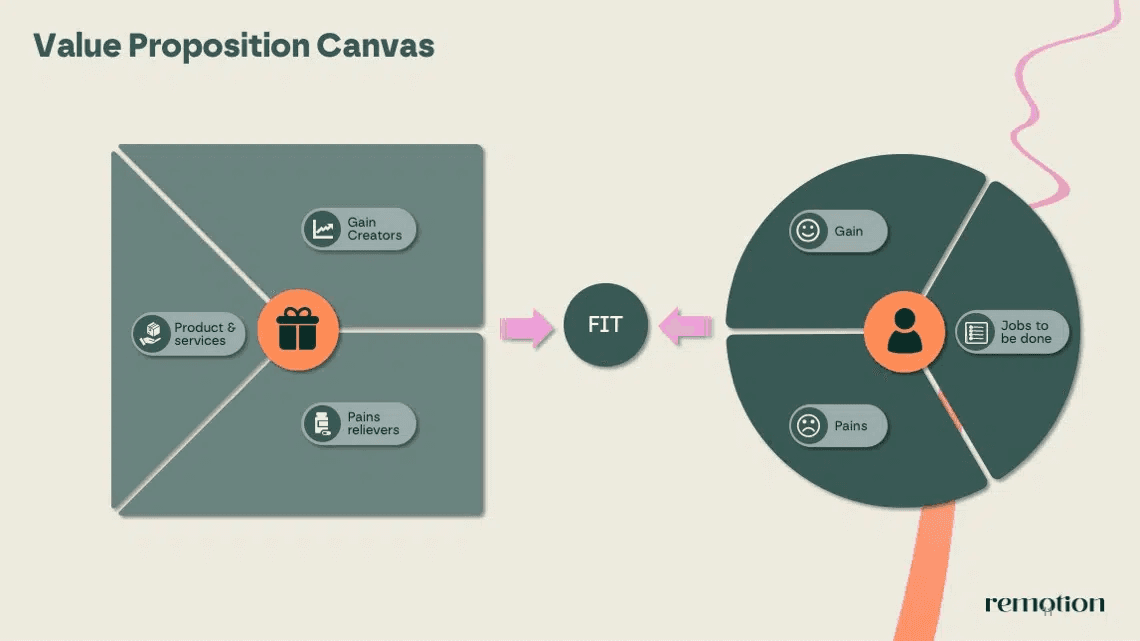
By using the insights from this research, you can shape a really compelling value proposition (Figure 1). This acts as your community's foundation, spelling out the unique benefits and perks that will help your audience the most. A clear target group and a solid value proposition set the stage for a community that doesn't just meet expectations, but beats them.
By defining exactly what members can expect to achieve, the positive experiences they will gain, and the pain points they can avoid, you lay the groundwork for your online community's design.
In the community world, customer jobs are the specific task members want to get done by joining, from looking for support and help to finding fresh inspiration.
Gains are the positive things members hope to experience, like an easy-to-use platform and a friendly tone in discussions.
On the flip side, pains are the negative experiences members want to avoid, such as worries about data privacy and general security risks.
To meet these member needs, you target both sides of the coin—making sure your community delivers value by boosting positive experiences and cutting down the negatives. This usually involves a mix of resources, expertise, tools, communication, and personalization.
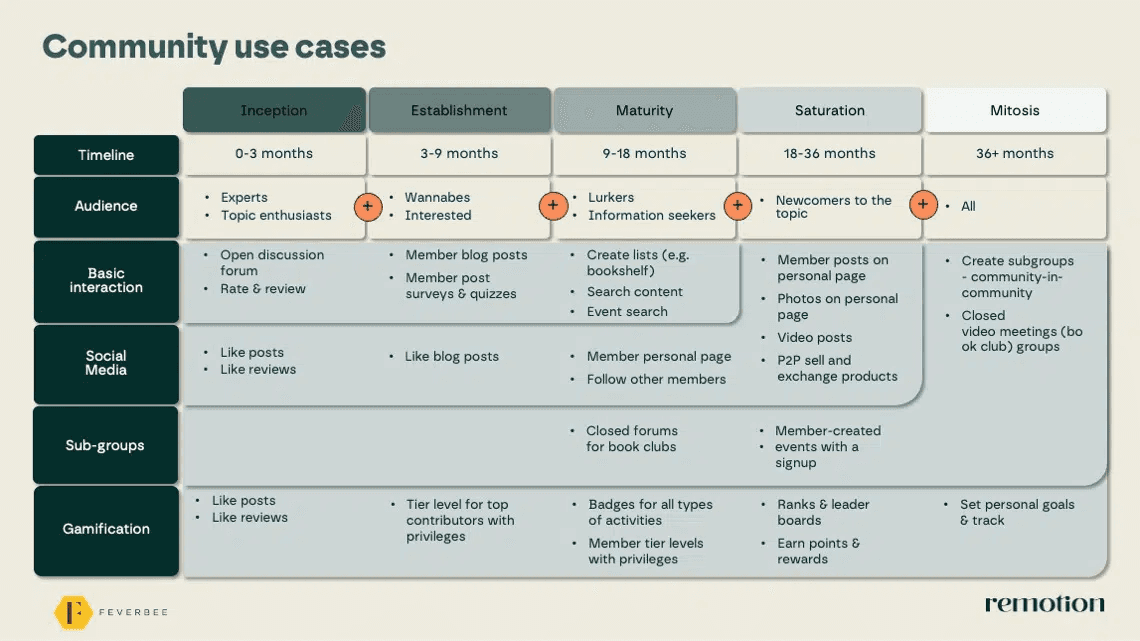
As your community matures, your audience changes too, meaning your value proposition needs updates along the way. Early on, members are usually highly knowledgeable and passionate about the topic. To build a core group of active, content-sharing members early, they often need to feel exclusive and valued (like getting VIP treatment). Once the community grows, the broader audience is usually more functional, looking for quick info or simple social connections.
For every stage of the maturity model, you must define your main target audiences and understand what they need. This forms the basis for rolling out the right features at the right time.
Prioritizing features to grow your community
There are countless features you can build for a community. Different tools bring value to members at different times in their journey. Based on your value proposition for each stage, you can prioritize new features (Figure 2). No matter how much you plan, you cannot predict with 100% certainty what features will be the most popular. That is why it is smart to start small—build, test, and learn. Update your product roadmap based on actual insights from each stage. A great tip is to involve your most active members to get their feedback on what to build next.
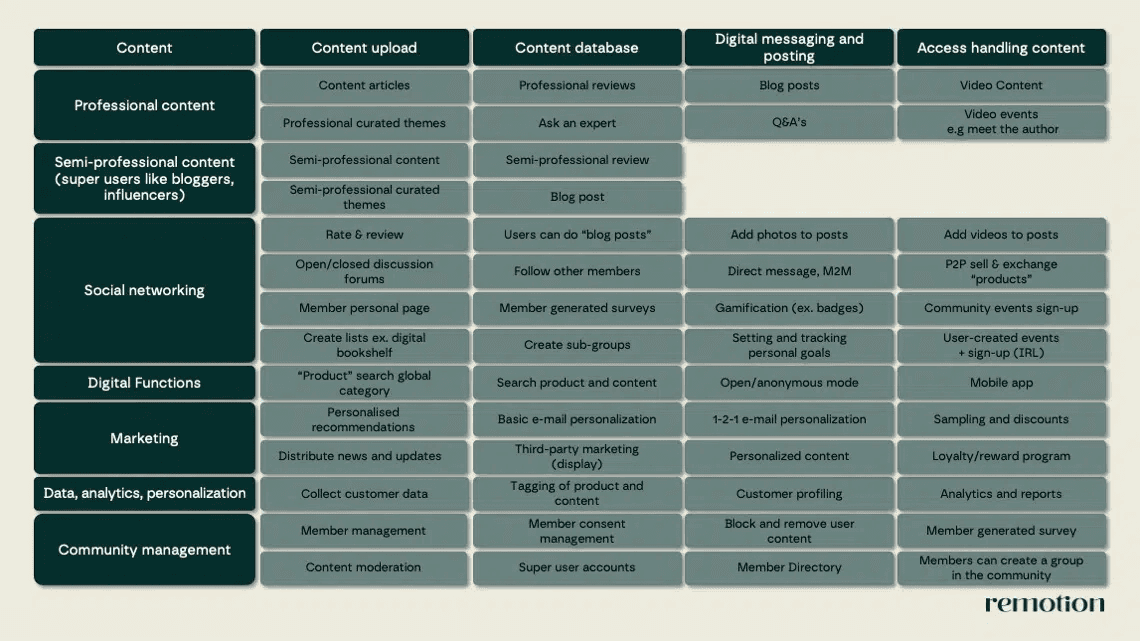
We have grouped the core capabilities needed for successful online communities in the diagram below (Figure 3).
Community launch plan
To get a clear picture of the budget, timeline, and tech needed, it is highly recommended to design a launch plan. While this plan will adapt over time, it gives everyone a shared roadmap to work from.
Setting clear priorities based on what matters to members in each phase keeps things transparent for everyone and guides day-to-day work. The launch plan is then adjusted as you make progress.
In short, creating a great value proposition is key to building a successful community. It means truly understanding what your audience needs, what gains they are looking for, and what pains they want to avoid. As your community evolves, your value proposition must evolve with it.
Deciding which features to build and when is crucial. Group them by what adds value during each phase of the lifecycle. Involving active members in this planning keeps your roadmap aligned with real needs. An agile approach—starting simple and adjusting as you learn—is the most effective way forward.
For long-term success, a clear launch plan is a must. It gives you a clear view of your budget, timeline, and tech stack. Based on prioritized features for each stage, it builds trust and guides ongoing development. This keeps your community flexible and ready to meet changing member needs.
At Remotion, we can help you run a feasibility study and build a business case for your brand, as well as help you deepen your knowledge of online communities. This is our third article in our series on online communities. If you missed them, check out our previous articles:
Article 1: Why do associations struggle to attract active members?
Article 2: Key strategies and insights for building a business case