Why do communities struggle to attract active members?
|
Post written by

Building a growing online community is tough, and many don't make it in the long run. We're sharing insights to help you avoid common pitfalls and show you how to attract active members. Learn about community lifecycles and strategies for success—from inviting VIPs to getting employees involved and using automation. Focus on your engaged members to keep your community thriving.
Challenges of building online communities
Many online communities struggle to attract and keep active members. This article looks at the challenge of building growing communities, strategies to avoid common traps, and how to keep your members engaged for long-term success.
Background
You might have thought about starting an online community to strengthen customer relationships and boost business value. But you might also have noticed that most new communities fail, making you hesitant to even try. Most never reach that critical mass of active members, despite big investments from major brands with huge customer bases. In this first article, we share insights on how to avoid common pitfalls so your community becomes a lively hub, not a ghost town.
The online community lifecycle
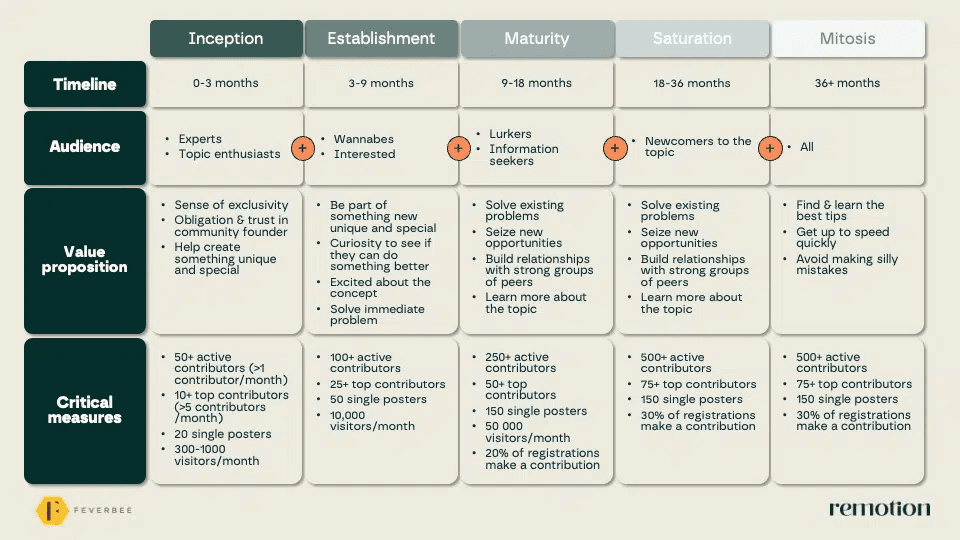
There are five stages in a community's lifecycle. Each stage has different goals and needs different tactics. One common hurdle throughout this journey is getting enough active members.
In most cases, communities fail because they don't attract enough people who actually contribute and create content. You need active members who start conversations, reply to others, write reviews, and interact. Most members will always just lurk and read. They love consuming what others create, but they don't post anything themselves. Since most of the content is user-generated, you need a strategy from day one to attract and engage active users.
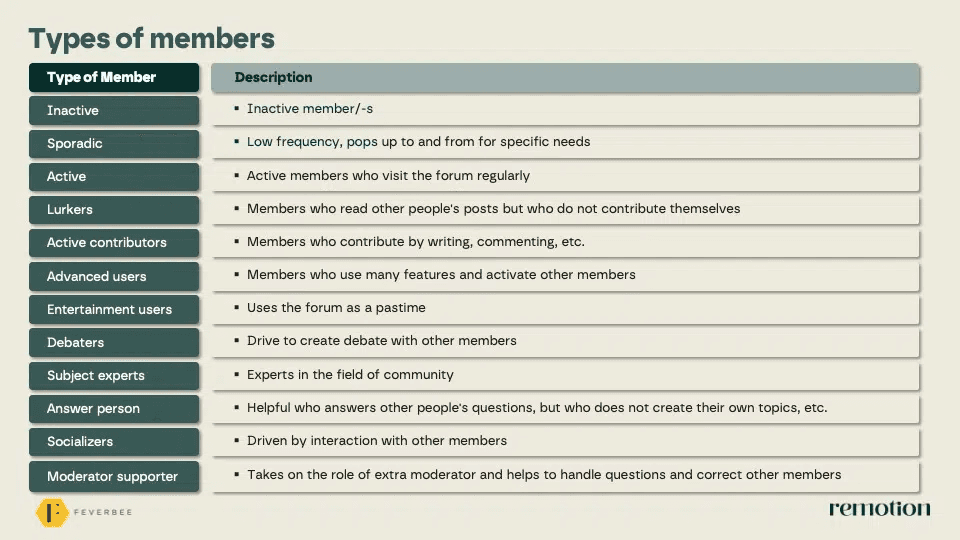
In any community, you'll meet different types of members, each with their own motivations, engagement levels, and communication styles (Figure 1). Each stage of the lifecycle requires tailored ways to recruit and develop active members. Let's dive into these stages (Image 2).
1. The Beginning
When you launch, you need to recruit a small core group of members. These are people with a genuine interest in your community's topic. They're often experts, professionals, semi-pros, or enthusiasts in the field.
A great way to start is by making it "by invitation only." This makes members feel hand-picked and excited to build something new. You can grow the numbers gradually by letting active members invite a limited number of others. These new recruits should get personal invites—they could be people in your network or those with a keen interest in the topic. You might even want to consider paying some of them for their active contribution.
You don't need tons of features at the start. In fact, too many features can make visitors feel like they're walking into a huge, empty house. We recommend starting with a simple discussion forum. If it fits your community, you can consider adding a rating and review feature in this first phase.
You'll need an active moderator right from the start. This role isn't just about policing bad behavior. More importantly, the moderator actively starts new topics, gets discussions going, and asks questions. In this first phase, they build personal relationships with members through welcome emails and direct chats.
The moderator needs to have great social and communication skills and a real passion for the community. Your most active members should also be involved in shaping the forum.
Expect this initial phase to take at least three months. This is the most important phase for building your foundation of active members.
2. Establishment
In the second phase, you open the forum to a wider audience, but keep a VIP feel. Actively invite customers and other relevant groups.
Invite the top or most active customers from your database. They should still feel like "VIPs." Maybe send a hand-written note or a personal email instead of a standard marketing blast.
See if there are any semi-professional content creators you can bring in, like a blogger or social media influencer with an active following in your niche. You can give these creators their own "corners" in the forum to run and grow.
The moderator plays key role here in keeping the conversation flowing. This means starting new topics, running polls, and checking in regularly with your most active members. You can grant these key users "super-user" status with extra privileges, like moderation tools. Consider setting up a advisory group of super-users to help you figure out how to improve the forum.
At this stage, you can also start getting your employees involved. Ask everyone, or a select group, to spend a bit of their working hours participating in the forum as regular members. Do you have team members with deep expertise who could share their knowledge?
This phase usually lasts from month three to nine, but it can take longer.
3. Maturity
In the maturity stage, you focus on capitalizing on the core of active members you've built, shifting your energy toward recruiting new members at scale.
If you have a large email list or high website traffic, use these channels to drive people to the forum. At this point, focus more on professional content designed to pull in search traffic. Use SEO tools to find topics and keywords people are searching for on Google. If your community has broad appeal, consider using paid media, like brand campaigns on Meta, to raise awareness.
Since you are now managing a large influx of members, you should start automating your communication. Make sure you have automated recruitment, onboarding, and activation programs in place. Use personalization, like recommended topics, to boost engagement. At the same time, keep nurturing your active contributors. Keep up personal VIP chats with your most engaged members.
4. Saturation
In this stage, many of your new members will be less familiar with your topic or niche. These users need a different kind of onboarding and automated messaging, like simple guides on how to navigate and use the site. By now, you've launched several new features, and you'll need to help new users get the most out of them.
5. Mitosis
Mitosis means cell division. At this point, the forum has grown so big that it's time for sub-communities. Members can start creating sub-forums for specific interests. Let your members run these areas as moderators. This shifts the job of keeping members active and engaged to these new moderators. Create meetups or groups for your moderators so they can swap tips and help shape the future of the platform.
Conclusion
Building a base of active, contributing members takes a plan and steady, daily effort right from the start. This is far more important than fancy features. Engaged members are the backbone of any forum, and they are where your focus should always be.
This is our first article in our series on online communities. In our upcoming posts, we will cover:
Article 2: Key strategies and insights for success
Article 3: Essential community features and how to create an effective launch plan