
New customer expectations
Today's customers no longer just compare you to your direct competitors—they compare you to the best digital experiences they have in their everyday lives. Streaming platforms, e-commerce giants, and digital services have set the bar for what personalized and relevant communication looks like.
At the same time, a major shift is happening in the marketing landscape: third-party cookies are disappearing. Businesses can no longer rely on external data to find and reach the right audience. Instead, first-party data – the information customers willingly share with you – is becoming the key to growth and customer engagement.
How does first-party data work in practice?
First-party data is all the information you collect yourself from customer interactions across your own channels. This includes purchases, web and app visits, email responses, loyalty programs, customer service inquiries, or preferences shared directly by the customer. However, the real value only comes when this data is linked to an identified customer and used for personalized communication.
An example:
A visitor lands on your website. Initially, they are anonymous.
If they log in, fill out a form, or arrive via an email link (using UTM tags), you can identify them and link the visit to a specific customer profile.
If you have consent to use their data for marketing, you can also link this identity to their email address or phone number.
This identity can then be matched with ad platforms like Facebook, Instagram, or Google—allowing you to reach the same person across multiple channels with a consistent message.
This is why first-party data is so vital. It lets you build a complete picture of your customer and talk to them on a personal level, even in a cookieless world.
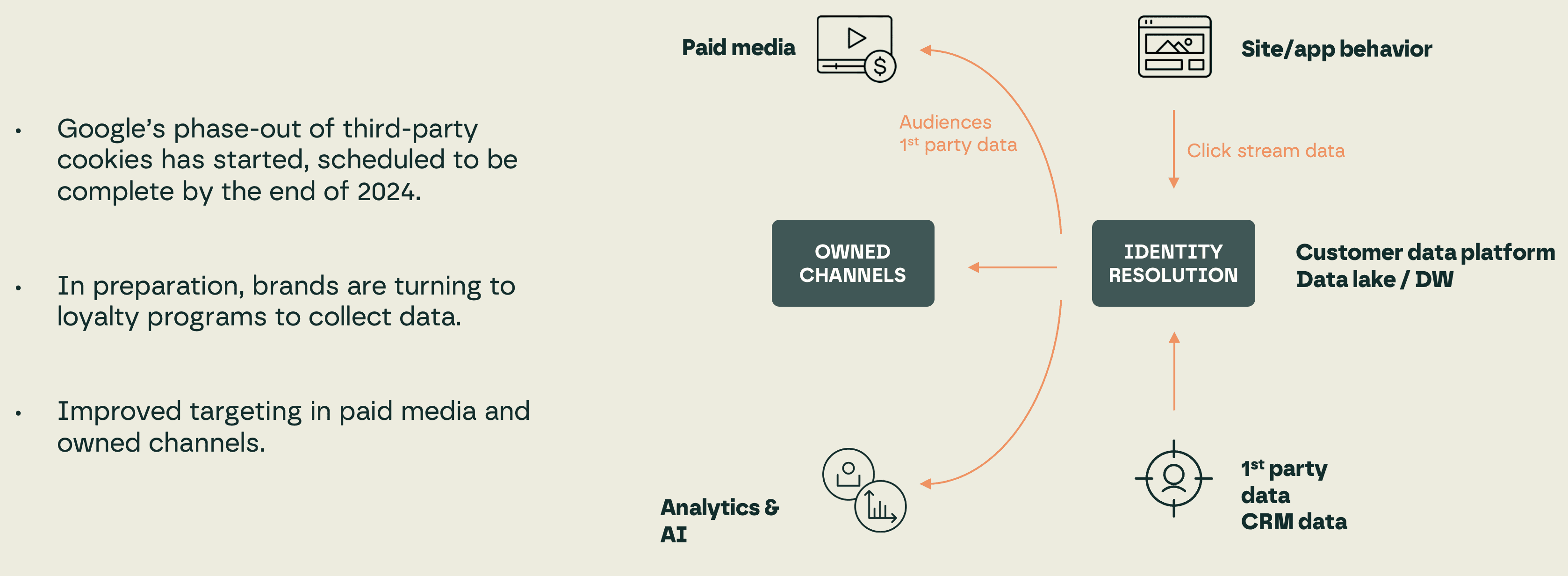
A forward-looking strategy for the post-third-party cookie era.
From customer journeys to customer engagement
Traditionally, marketers have focused on mapping out the "customer journey." But the reality is far from simple. Customers bounce back and forth between channels, skip steps, compare options, read reviews, find tips on social media, and make decisions at their own pace.
That is why we talk about Customer Engagement rather than just customer journeys. The focus shifts from trying to control a set path to engaging the customer whenever and wherever they choose to interact with you.
Customer Engagement is built on a few core principles:
Real-time understanding: seeing what the customer is doing right now and being able to act immediately.
Trigger-based interactions: letting customer behavior guide the next step, instead of sending the same campaign to everyone.
Omnichannel: meeting customers on their preferred channel—and keeping the experience seamless when they switch channels.
1:1 personalization: moving past broad segments to create communication that feels relevant to the individual.
This way, engagement becomes an ongoing conversation—not just a one-off campaign or a linear journey.
Four keys to success with first-party data
Making the most of first-party data takes both the right tech and the right approach. Here are four areas businesses should focus on:
Secure consent and update privacy policies
To use data, you need the right consent from your customers. This means more than just a quick "accept" on a cookie banner—you need a clear, updated privacy policy that covers how you plan to use it.
A common mistake is having a policy that is too general or doesn't cover new uses, like combining data from different sources or using it for social media ads.Gather all your data in one place with a shared ID
Customer data is often scattered across different systems: e-commerce, CRM, email platforms, apps, and physical stores. Without a shared ID for each customer, building a complete picture is impossible. That is why it is crucial to bring your data together in a central platform and link all relevant details to a single customer profile.
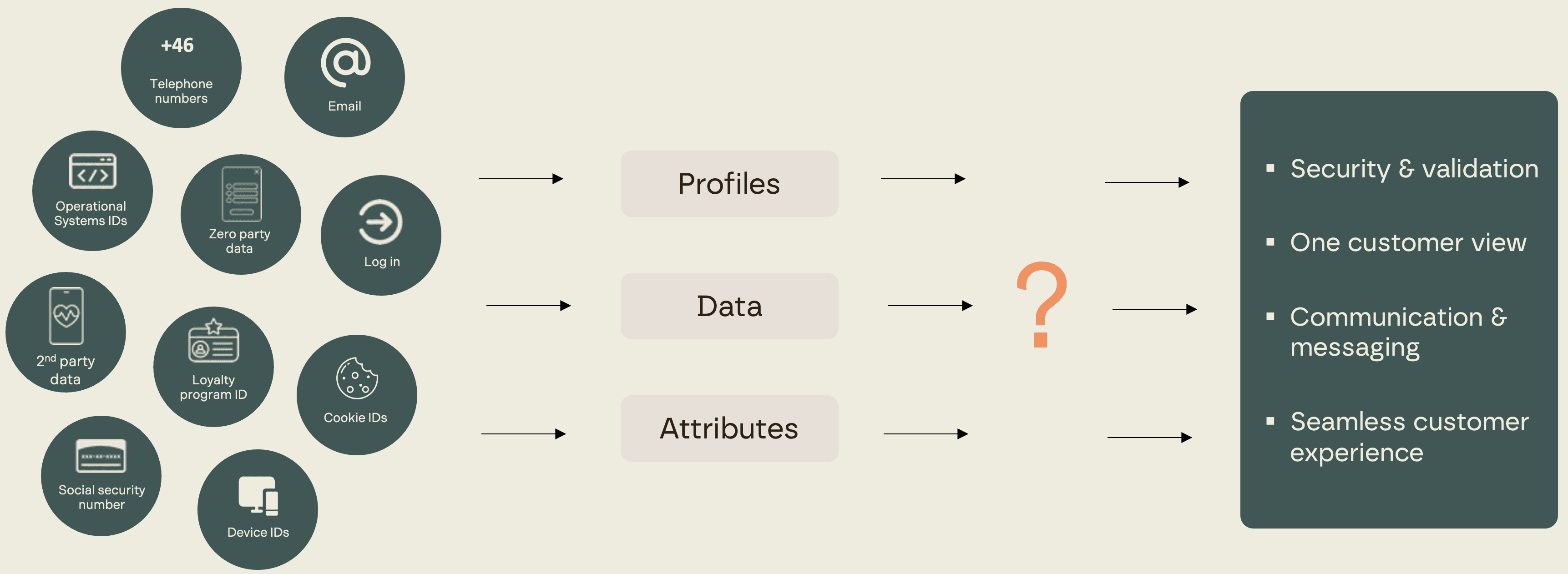
Creating a single customer view is a challenge in today's omnichannel world.
Clean up duplicates and split identities
A customer might show up in your systems in several ways—as a loyalty member, newsletter subscriber, app user, or registered web guest. Without automatic tools to merge these profiles, your view of the customer stays fragmented and you risk sending duplicate messages. You need a way to link customer identities in real-time, often called identity resolution or profile unification. This can be handled in a CDP or your master database, depending on what fits your business best.Make sure you can activate your data where it matters
Collecting data is only half the battle—you also have to use it. This is where Customer Data Platforms (CDPs) often shine. A CDP makes it easy to trigger automated campaigns, manage conversations across channels, and personalize experiences in real-time. This is especially important for paid media ads now that third-party cookies are on their way out. To do this, you will need to connect platforms like Meta directly to your CDP or Marketing Automation system (via a conversion API).
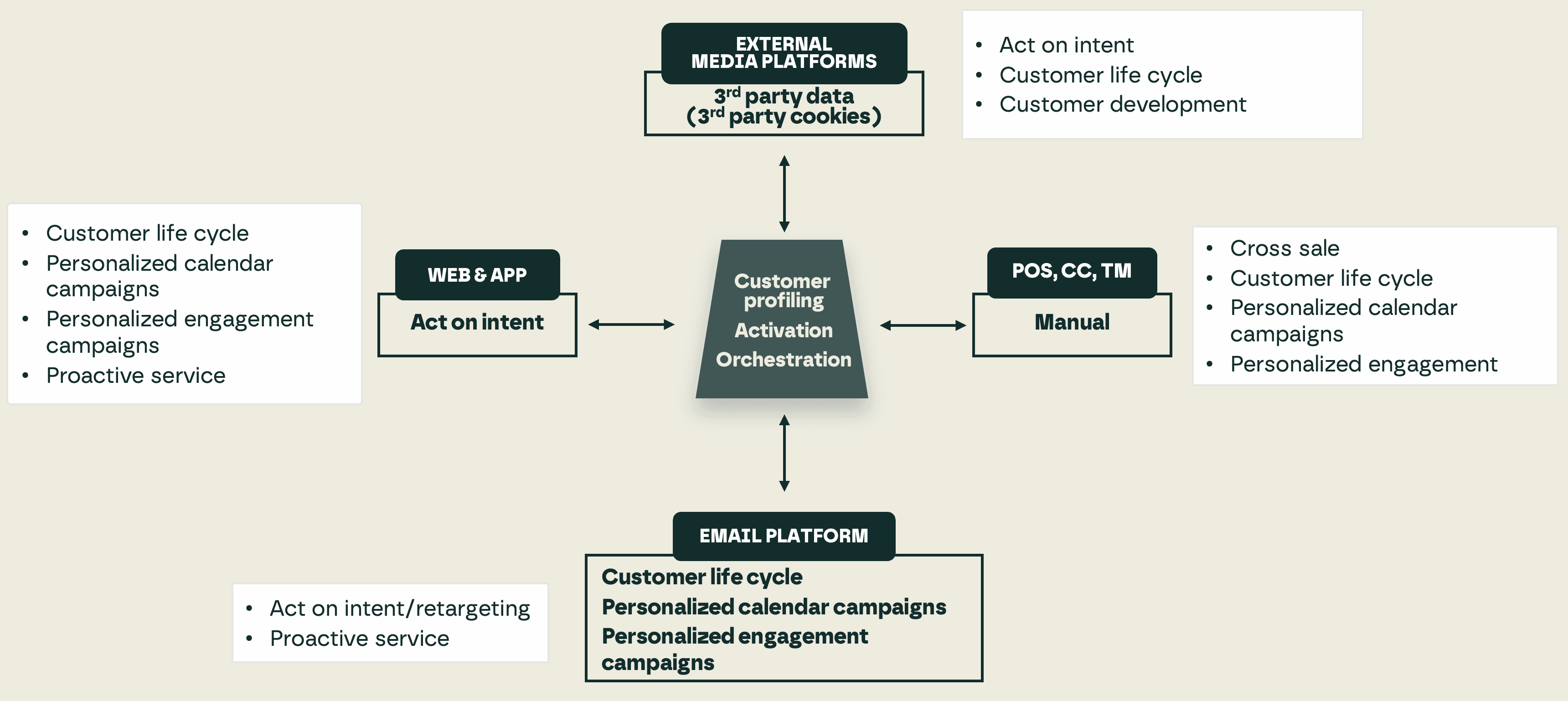
The ability to coordinate all customer conversations across every channel is the key.
Start with a simple question
Customer Engagement can sound big and complex, but the first step is actually quite simple:
How much do you currently know about your customers—and how are you using that knowledge?
Starting here will quickly show you where any gaps lie in consent, data management, profile merging, and activation. From there, you can build a more relevant, lasting, and profitable relationship with your customers.