Revolutionary customer loyalty program
|
Post written by

Traditional loyalty programs often fail to deliver the business value we expect because they're built on guesswork and rigid structures. In this article, we'll dive into how you can reshape your loyalty program using customer data analysis to create dynamic, engaging, and genuinely valuable experiences. We'll cover common challenges, introduce data-driven solutions, and talk about why clear business goals are so important.
Why many loyalty programs miss the mark
Too often, new loyalty programs fail to meet their goals because they are based on opinions rather than real customer insights. With an overwhelming number of features to choose from, making decisions gets tough—leading to dynamic-lacking, rigid programs that don't fit different customer groups and fail to bring actual business value. As a result, customers disengage, finding the programs too complicated or simply uninteresting. To make matters worse, lacking clear KPIs to measure business value leaves companies guessing about how well their program is actually performing.
The loyalty program dilemma
Loyalty programs are meant to build customer love and brand loyalty. However, many fall into the trap of being too complex, stiff, and disconnected from what customers actually want. Common pitfalls include not matching customer needs, offering too many confusing features, and using static structures that don't adapt as customer behavior changes. Without active engagement strategies and measurable business goals, these programs quickly fall flat. This is why a flexible, insight-driven approach is key to keeping loyalty programs relevant and exciting.
Designing data-driven loyalty programs
To overcome these challenges, a data-driven approach is essential. By setting clear business goals—like boosting brand perception, shifting customer behavior, and using customer data to drive better engagement—programs can hit specific targets. This method involves a straightforward four-step customer data analysis, testing new features with the right audiences, and making sure data-driven communication is built into every part of the program.
1. Set clear goals for your program
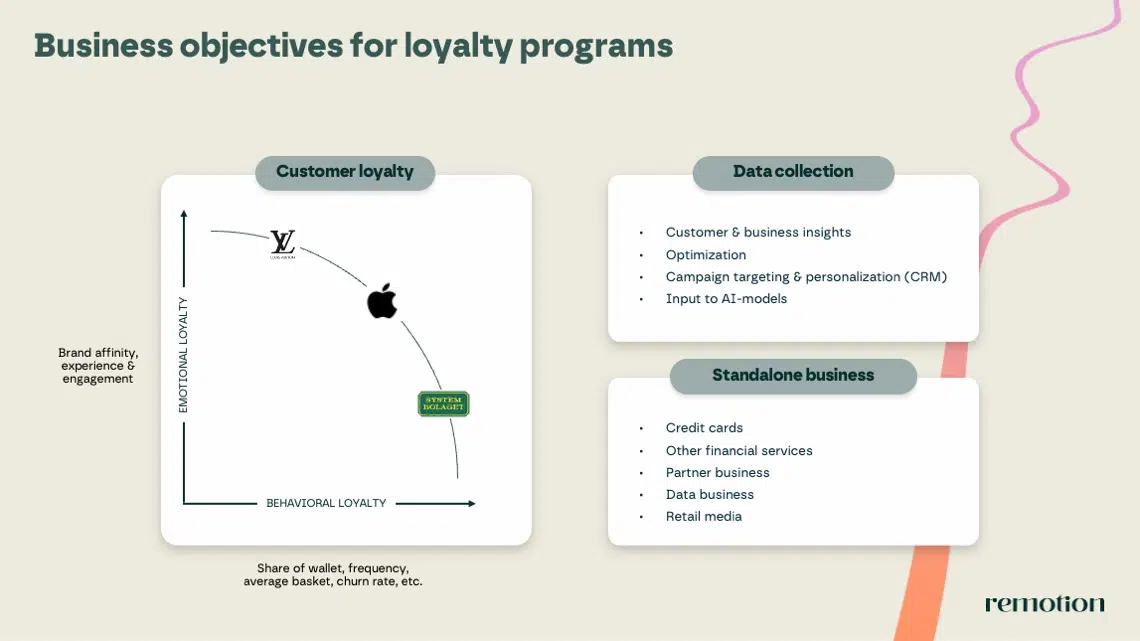
When it comes to loyalty programs, we generally look at four main types of goals: (Figure 1)
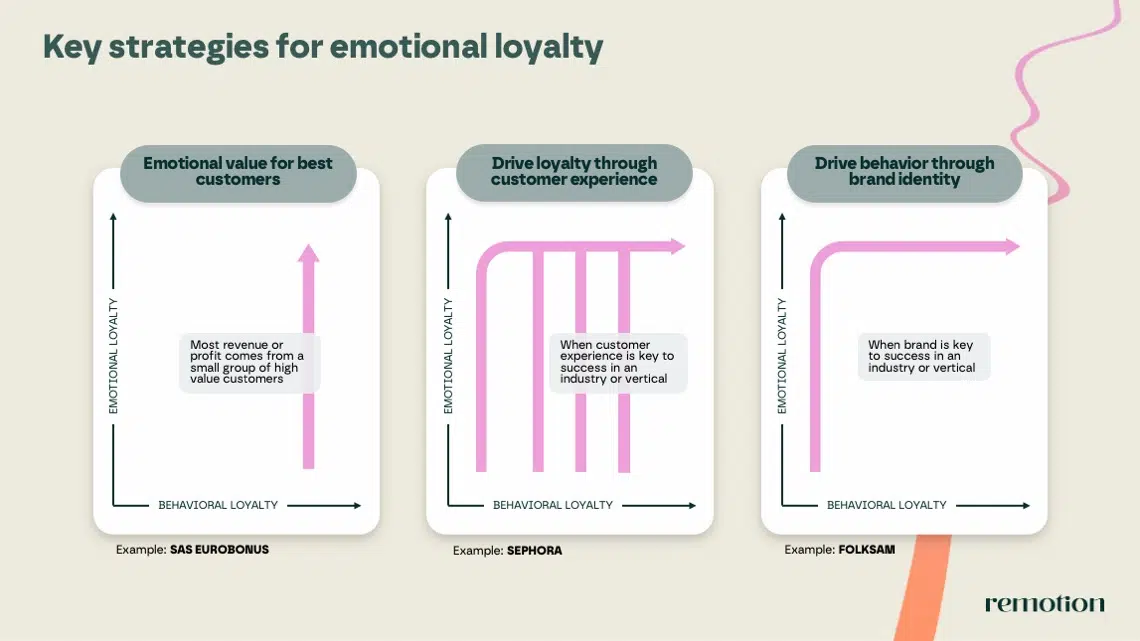
Drive emotional loyalty (Figure 2) - how customers actually feel about your brand and what you offer
Drive customer behavior - encourage habits that ultimately maximize the customer’s lifetime value
Gather customer data - sometimes the goal is simply to collect customer data at a lower cost, which can then be used for personalized marketing and business insights.
Stand-alone business - when the program itself is meant to generate revenue, like selling credit cards, sharing data with partners, or running a partner program where you sell points to other brands.
In reality, your program might have a mix of these goals. The key is to define each one clearly with specific KPIs so you can easily measure and report on your success.
2. Analyze customer data
Refining your customer data analysis to identify and shape behaviors that maximize lifetime value comes down to a structured approach. Here are the key steps:
Identify value drivers: Start by analyzing your customer base to find the key traits that influence customer value.
Prioritize value drivers: Use statistical modeling to see which traits matter most, focusing on the ones that have a real, actionable impact on customer value.
Implement a segmentation model: Group your customers based on these key value drivers to help you prioritize your actions for different segments.
This analysis gives you the foundation you need to design your program and influence behavior in each customer group.
3. Test before launching
Before rolling out new features, test them with your target groups and tweak them based on feedback. This ensures you only launch things that actually work. Some features might be open to everyone, while others can be selectively offered to encourage specific actions.
4. Integrated data-driven communication
Every part of your program should be backed by smart, trigger-based communication. This ensures every interaction feels personal and timely, keeping your customers engaged and loyal.
By following this four-step strategy, loyalty programs become more dynamic, personal, and effective, boosting both customer engagement and business value.
Business goals for loyalty programs
Key strategies for emotional loyalty
Conclusion
At the end of the day, the secret to successful customer loyalty lies in using data wisely. By setting clear goals, analyzing customer behavior, and implementing a simple four-step strategy, loyalty programs can become dynamic and highly effective. Testing features and using integrated, data-driven messages will keep your content relevant and engaging. This approach not only solves common program headaches but also sets you up for continuous improvement. In today's fast-changing market, using real customer insights to deliver personal, engaging experiences is the best way to earn lasting loyalty and see a real return on investment.